
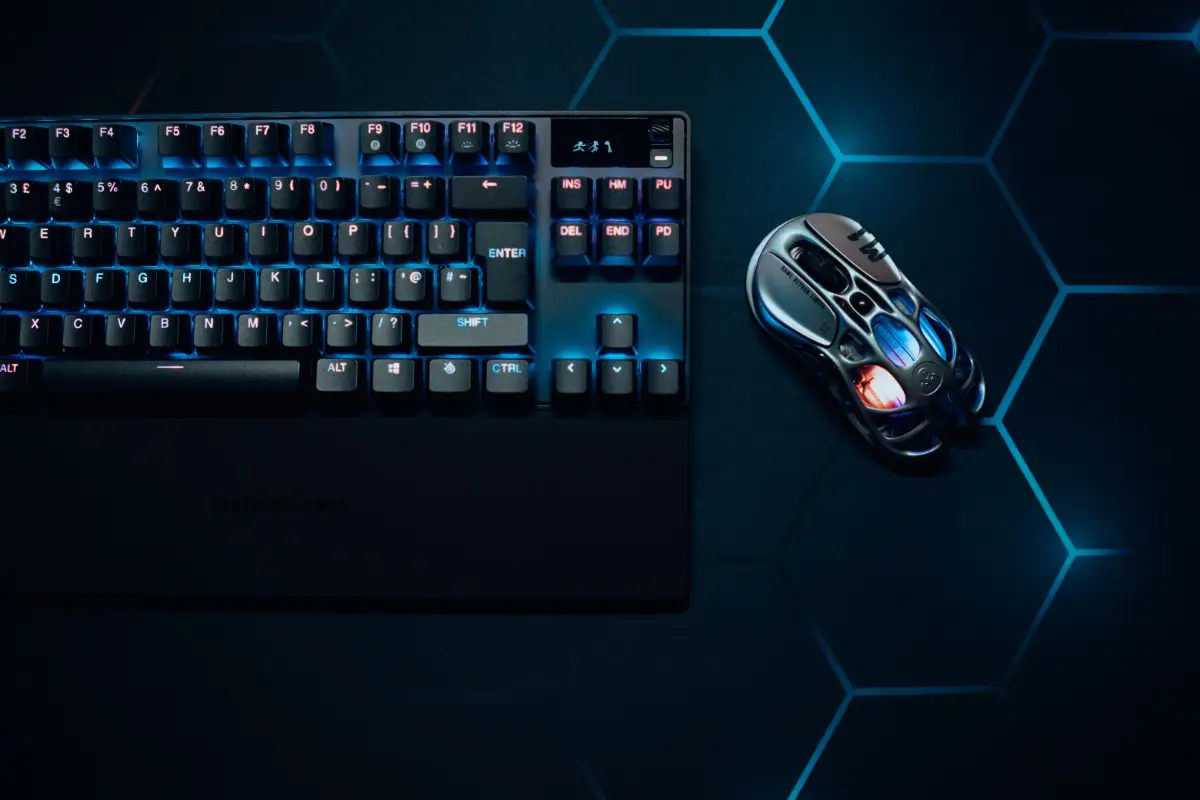
There are technologies coming out every other day. It leaves users confused about which one is perfectly suitable for them when they do not know the differences. In order to fill this gap, we have built this guide, which is called Optical vs Hall Effect Keyboard: Which One to Buy in your case. After reading this guide, there will be no doubts left in your mind about which one to select that perfectly fits your use.
Whenever you initiate a search on the internet to buy a keyboard, you will have seen two terms come up a lot. Those two terms are optical and Hall Effect keyboards. Both of them are based on newer technologies compared to the traditional mechanical metal switches. These newer technologies are more reliable, and they last longer. Before placing an order, it is necessary to know what they offer, which one is more reliable and which one gives you more options for customization.
What Is an Optical Keyboard
Technology behind optical keyboards creates a path with invisible light. Typing starts the magic. A faint shutter shifts. Light flows across. Sensors pick up each tap almost instantly. No metal pieces come together, so springy delays common in old switches quietly disappear. Around the late 2010s, top gaming names sent optical varieties right into the spotlight. Fast response became the buzzword. Competitive folks wanted every millisecond. In the actuation zone, no bits rub or grind, so the feeling may keep steady for years. Typically, optical models arrive with a locked-in actuation spot, so every button fires at the same depth. That clear, regular feedback may explain why so many first-person shooter fans keep going back to opticals with every click.
What Is a Hall Effect Keyboard
Magnets and sensors combine inside a Hall Effect keyboard, not beams of light. Each keycap holds a hidden magnet. As your finger moves the key, the magnet slips closer to a sensor beneath it. The sensor then catches the magnetic force, measuring exactly how far the key moves. That small detail could change everything. Engineers already trusted Hall Effect tech for decades, but mass-market buyers saw a boom from 2023, after prices dropped. Many hardcore users flocked to it quickly. The biggest appeal glows in the word: adjustable. Set your own trigger point. Change how jumpy the keys feel. Try out functions that locked switches simply cannot handle. Once a rare option, Hall Effect models now lead new trends among demanding gamers everywhere.
Key Differences Between Optical and Hall Effect Switches
At first glance, both technologies seem to share speed and the absence of metal. The main difference appears once you start pressing and tweaking. Optical solutions push for pure speed and no-hassle play. Hall Effect models reward those who want options and fine-tuning. Thinking through these types from four different angles may help you find the perfect match for your own style or job.
- Actuation Style: Optical switches usually fire at one fixed digital point, the same depth every time. Hall Effect switches let you slide the trigger point up or down, so you decide how light or deep each press must be.
- Analog Input Support: Hall Effect switches read your press as a smooth range, which gives you true analog behavior. Push a key halfway and a car might roll slowly. Optical switches generally register a press as on or off, so analog control is rare or limited.
- Rapid Trigger Support: Hall Effect boards handle instant re-press detection with ease, resetting the moment you lift even slightly. Some newer optical boards now offer similar features, though the technology grew up around magnetic sensing.
- Software and Tuning Depth: Hall Effect ecosystems tend to give you granular control over every key. Optical software often keeps things simpler, which suits people who prefer plug and play.
To put it bluntly, an optical keyboard hands out fast reactions with no need to adjust anything. A Hall Effect keyboard gives your fingertips a personal control deck. Each path stands tall. Your answer hangs on your need for either easy use or for endless tweaks.
Performance for Gaming
Milliseconds seem to matter deeply for serious gamers. Some players swear by optical switches. The promise of light-based signals brings hope for lightning-fast responses. Fewer moving pieces may mean inputs feel pure and crisp. Other dedicated fans prefer Hall Effect switches. Custom trigger spots and quick resets sound very tempting, especially for those who love fast-paced shooting games. Both sides have their reasons. The real secret in a tense aiming contest might be the instant key reset, not which switch sits below the keycap. Hall Effect makers often highlight this with pride. Analog sensing may help even more when racing or flying — easing into a turn can feel better than a harsh click. Many professionals still trust optical switches. Victories arrive for both groups. Skill probably wins more games than technology changes, no matter what the marketing teams tell you.
Performance for Typing and Office Use
Once away from gaming, hands often crave comfort before speed. Typing for long hours needs a switch that glides and feels gentle. Optical switches usually deliver a steady, even press. Many writers probably find this pleasing. Hall Effect switches can give similar comfort. Raising the trigger spot might help avoid accidental taps, which matters during a full day of writing. Texture and noise have more to do with the board shell and the key covers than with the sensing method. Any style can seem loud or quiet, depending on the design and materials. For number work or emails, both switches may serve just fine. If work at the desk never ends, focus on the keyboard weight. Put trust in sturdy housings, quiet padding, and good key covers instead of worrying about which sensor type lives inside.
Durability and Longevity
Both modern technologies probably offer an honest upgrade compared to classic mechanical boards. No contact points strike together, so nothing inside usually rusts or bends. Old-fashioned switches often claim long life, but these newer models may last even longer. No touching parts means no extra wear. Light beams keep shining. Magnetic fields probably stay strong. The result? Many years of reliable typing with almost no risk of keys acting up or dying. Key covers or stabilizers may wear before the switch ever fails. That seems like a lucky problem. Anyone who dislikes buying new keyboards every few seasons might find peace with these designs. Find a trusted maker, pick a solid model, and the switches themselves may survive much longer than your interest in the keyboard.
Price Comparison
Money might not decide every battle, but value always matters. Optical boards have filled store shelves for much longer. Many brands offer starter models at prices that feel gentle on the wallet. A reliable optical keyboard may even appear in sale bins from the big gaming makers. Hall Effect gear used to ask for luxury budgets. Now, price wars have changed the game. The middle slice of the Hall Effect market presents lots of smart buys that can stand side by side with optical models. Top shelf Hall boards still often cost a premium. The most affordable contactless option probably comes from the optical camp. For the deepest custom settings without spending a fortune, Hall Effect might surprise many with its accessibility now. Both types see wild price swings. A little more cash often leads to a sturdier keyboard body, whichever tech you choose.
Which One Should You Buy
Real needs drive the best keyboard pick. Everyday use probably shapes this decision more than sticker price. A person who plays fast-paced games searches for something different than a writer planning a novel. Shoppers chasing deals or must-have features usually have their own priorities too. Personal habits may steer you toward the right type.
- Play Competitive Games: A Hall Effect board with adjustable triggers and rapid re-press will probably serve your reflexes best, and you can explore the top models in our roundup of the best Hall Effect keyboards for gaming to find one that fits your setup.
- Type More Than You Game: Focus on comfort and build quality, since either switch types feels great, and a well-dampened optical board often delivers a satisfying everyday experience at a lower cost.
- Budget Is Your Main Concern: An entry level optical keyboard usually gives you the most speed per dollar, though affordable Hall Effect models are closing the gap fast.
- Comparing Broader Switch Types: Before you settle on any contactless option, read our full breakdown of Hall Effect keyboard vs mechanical keyboard to see how magnetic sensing stacks up against the classic design.
No answer can claim universal truth here. The best fit depends on your own hands and purpose. Fast-action fans may gravitate toward Hall Effect models for their precision. Players on a budget seeking proven speed will likely end up with optical keys. Trying both boards in person might reveal your favorite feel almost instantly.
Comparison Table: Optical vs Hall Effect Keyboards
Both switch types promise fast, contactless performance, but they differ in how much control and tuning they actually offer. The table below breaks down the key differences side by side to help you decide.
Frequently Asked Questions
Is Hall Effect better than optical for gaming?
Not every situation tips toward Hall Effect. Analog style controls and sensitive triggers might sound tempting, especially for seasoned players. Optical technology still offers lightning-fast response. Needs probably decide what shines brighter: deep tuning, or easy setup?
Do optical keyboards wear out faster?
A short answer: probably not. No metal contact sits inside an optical switch. Light handles the actuation, so the usual wear seen in mechanical switches never appears here. Most models stay reliable through countless hours of typing or gaming.
Can I use either type for typing all day?
Almost every design keeps hands happy for long stretches. Comfort comes from the case, keycap shape, and the stabilizers more than from sensor type. A model made for comfort should serve well, whatever the technology inside.
Which one has better software support?
Most Hall Effect models bring a toolkit of deep customization. Trigger levels and key-by-key tweaks probably feel limitless. Optical systems usually keep things straightforward. Tinkerers who love playing with every setting might lean Hall Effect.
Conclusion
Whichever path you choose, you win. Both optical and Hall Effect keyboards leave standard mechanical switches behind in speed, durability, and consistency, so any upgrade here feels like a genuine leap forward. Optical gives you proven quickness with little fuss. Hall Effect hands you a tuning playground built on the physics of how a magnetic field creates a measurable voltage. Match the technology to your daily use, respect your budget, and trust your hands during a quick test. Do that, and you will not reg

Haroon writes about productivity and sync tools. He covers how to connect Outlook and Google so your calendar, contacts, and tasks stay in one place.